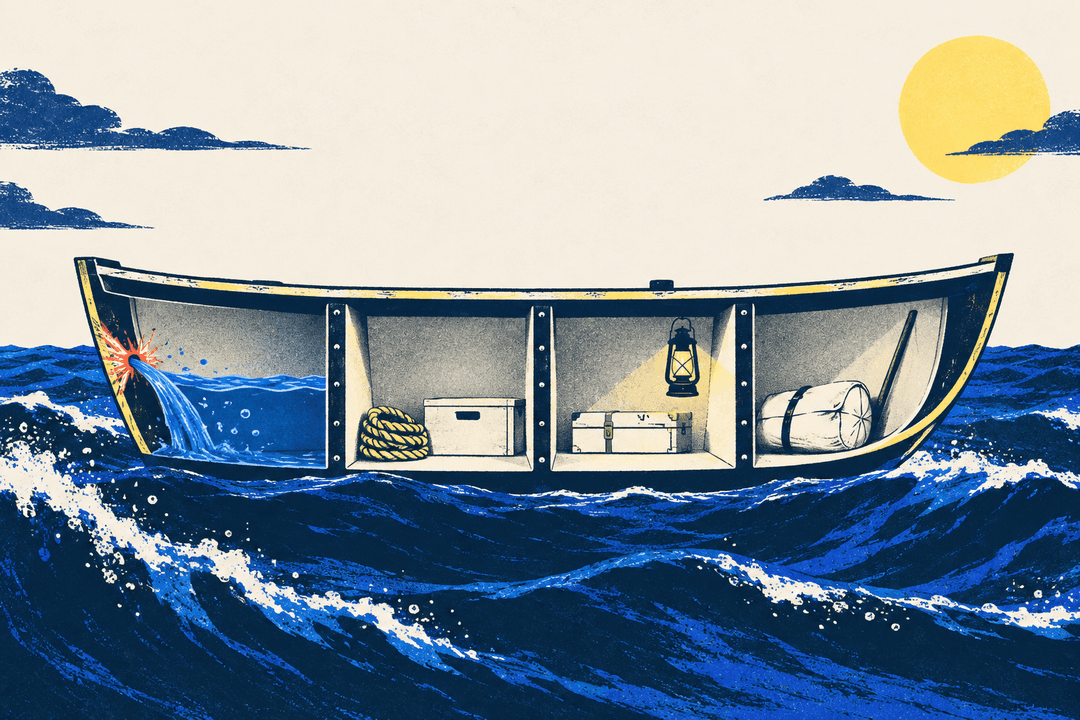
Three years ago a friend asked me to build her an app. I never finished. I'm picking it back up with AI.

Three years ago a friend asked me to build a patient management app for her therapy practice. I started. I never finished.
She runs a private practice, sees patients individually and as couples, and manages everything with a Google Sheet that has roughly 50 monthly tabs and five years of session data. The Sheet works. It has worked for years. What she doesn't have is time, and what I didn't have, back then, was time either. I was juggling client work and never carved out the hours. I got through some interviews, some sketches, a few rough screens, and then it stalled. The bottleneck was the only one I knew how to name at the time: my own coding hours.
A few months ago I picked the project back up. This time I'm using AI agents end-to-end. Not just for code. For everything: the discovery, the requirements, the prototyping, the validation, the build. This post is the start of a series where I write down what I'm finding as I go.
The original attempt
Back in 2023 I recorded eight voice interviews with her. Five of them were workflow discovery (how she runs her day, how the Sheet actually works, where the paper notes fit in, how she handles WhatsApp payments and her invoicing process). Three were prototype feedback on some early sketches. Then I did what felt like the only thing to do: I listened to each recording, took notes on paper, tried to keep the threads straight in my head, and started designing screens. There was no transcription pipeline I could afford to run. There was no synthesis layer. There was just me, the recordings, my notebook, and a vague plan to start building "soon".
"Soon" never arrived. The project sat untouched for about two years. The friend kept using her Sheet. She still does, today, while I write this. She didn't ask me again. She didn't need to. She had a system that worked for her, and the cost of switching was always going to be higher than the cost of staying.
The restart
I picked it back up earlier this year. The first decision was the only one that mattered: this time I'd use AI agents at every phase of the work, not just at the part where I write code.
I knew, going in, that AI was going to speed up the coding. That was the obvious part. What I didn't know was what would happen everywhere else. So I made a small bet with myself: instead of jumping back into screens, I'd treat the whole thing as a real engineering project, with phases, done criteria, and a single thread running from her words in the 2023 recordings through to whatever production code eventually gets shipped.
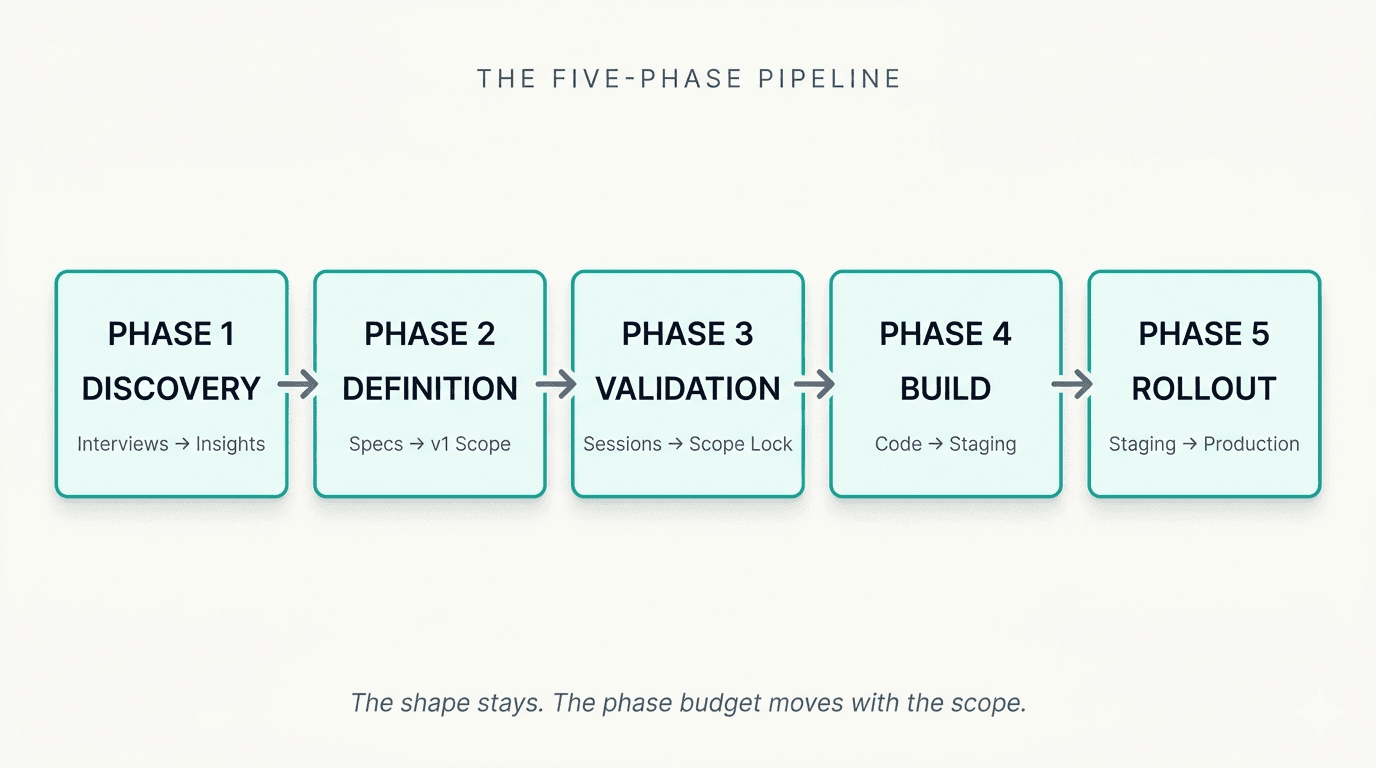
I broke the work into five phases. Discovery, Definition, Validation, Build, Rollout. Each one closes on a milestone with an objective done criterion. The first three are now complete. The fourth started last week.
What's different this time
What changed isn't the phases. Plenty of engineers have run shaped pipelines like this before. What changed is what an AI agent can do inside each phase.
Discovery was the first surprise. I fed the eight old recordings through AWS Transcribe, then handed the JSON to Claude as a synthesis layer. The output wasn't a transcript dump. It was structured: thirty-one pain points, twenty-four workflows, a list of entities, around forty design considerations, each one tagged to a specific interview and a specific moment. The thing that would have taken me a week of close reading and paper notes took an afternoon, and the artifact was sharper than anything I would have produced by hand.
Definition produced sixteen spec documents totaling around forty thousand words: a domain model, thirty-five user stories with MoSCoW priorities, six workflow diagrams covering all the workflows I'd identified, UI requirements, non-functionals, a story map, a release plan, effort estimates. I drafted these in conversation with Claude, sentence by sentence, with the insights document open as the source of truth. Every story traces back to a pain point. Every pain point traces back to a quote. This pace runs heavy, I'll say it plainly. The project has five years of historical data and no commercial deadline, so I have room to be thorough. For a normal startup MVP I'd compress all of this to a few weeks. The shape is portable; the budget moves with the scope.
Validation was where the agentic part got most interesting. I built a custom Claude Code skill that takes a recorded validation session and produces a structured debrief: per-bloque summaries, deltas against the existing insights, spec amendments, and tracker entries. I ran seven sessions with her across six weeks. Every change to the specs traces back to a specific moment in a specific session. The insights document grew from thirty-one pain points to forty-six, from twenty-four workflows to thirty-one, from forty design considerations to around eighty-two.
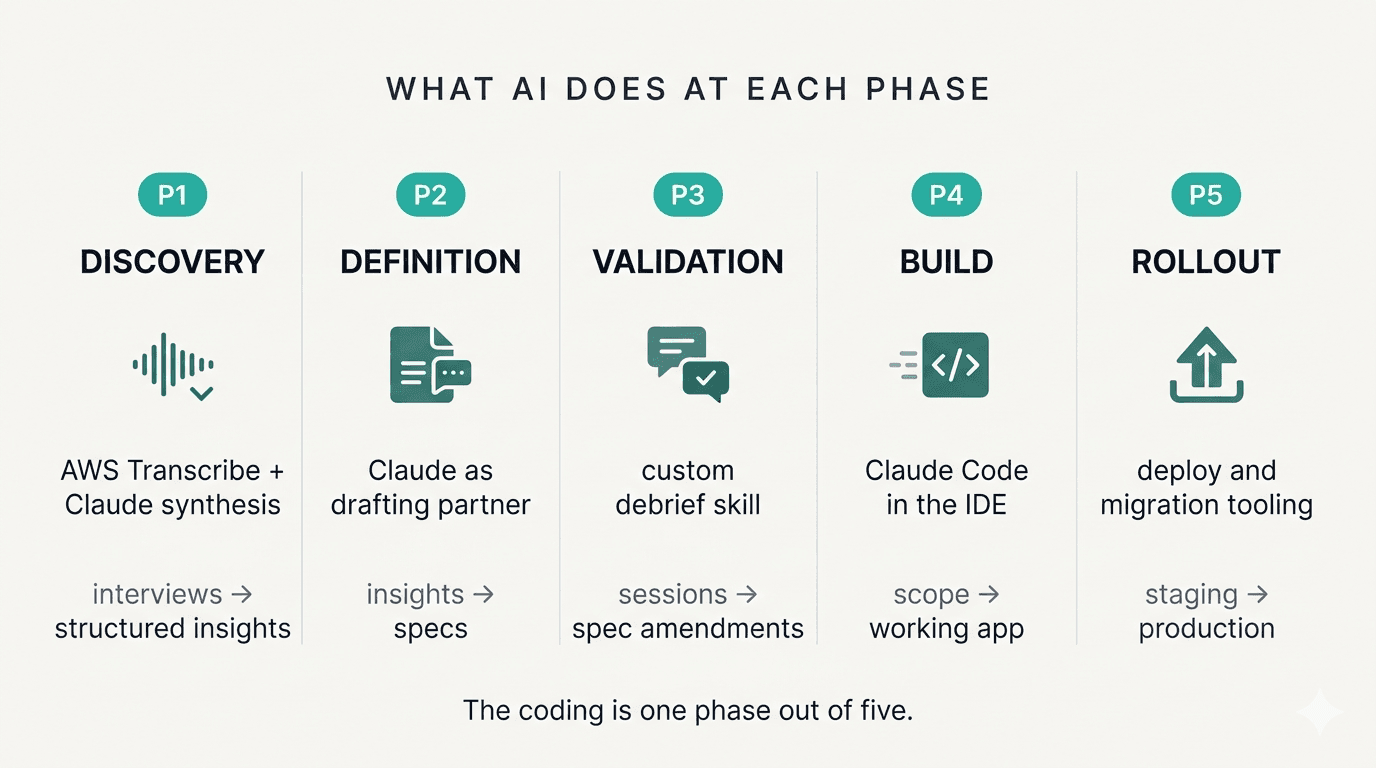
Build started last week. My time situation has shifted since 2023, which is the other thing that's different. I'm spending this year transitioning from fullstack work to building AI-powered products, so I have the days for this kind of focused project. The friend's app is the first end-to-end case study of that work.
What's surprising me
Here's what I didn't expect. I expected AI to help me write code faster. It does. The code is going to take days, not months. That part of my mental model was right.
What I didn't expect is what happened to the other phases. The synthesis pass in discovery is the obvious one, but the more striking thing is what happens to definition and validation. With a debrief skill running on session transcripts, validation produces structured spec changes instead of a backlog of vague notes I'd have to triage by hand. The cost of validating with the actual user across seven sessions, in terms of my time, was lower than the cost of one round of paper-notes triage I would have done in 2023.
I keep noticing the same thing, in different shapes, at every phase. The bottleneck moved. It used to be that the slow part of building software was writing the code. With agents writing the code, the slow part isn't writing anything anymore. The hard work and the value have shifted upstream: into understanding what to build, defining the right thing, validating that it works for the actual user. The phases that used to be a warm-up for the real work are now where the real work happens.
I'm not declaring this as a finding. I'm just saying it out loud because I keep seeing it. The series will either bear it out or it won't.
#BuildInPublic #ClaudeCode #AIEngineering #AIAgenticEngineer